Transponder Key Programming When Your Car Won't Start
By Keyclinic ·
A newly cut car key can turn in the ignition and still leave you stranded. If the engine cranks but will not start, or a security light stays on, transponder key programming may be the missing step. The key has to do more than fit the lock. It has to communicate with your vehicle's anti-theft system before the vehicle will allow the engine to run.
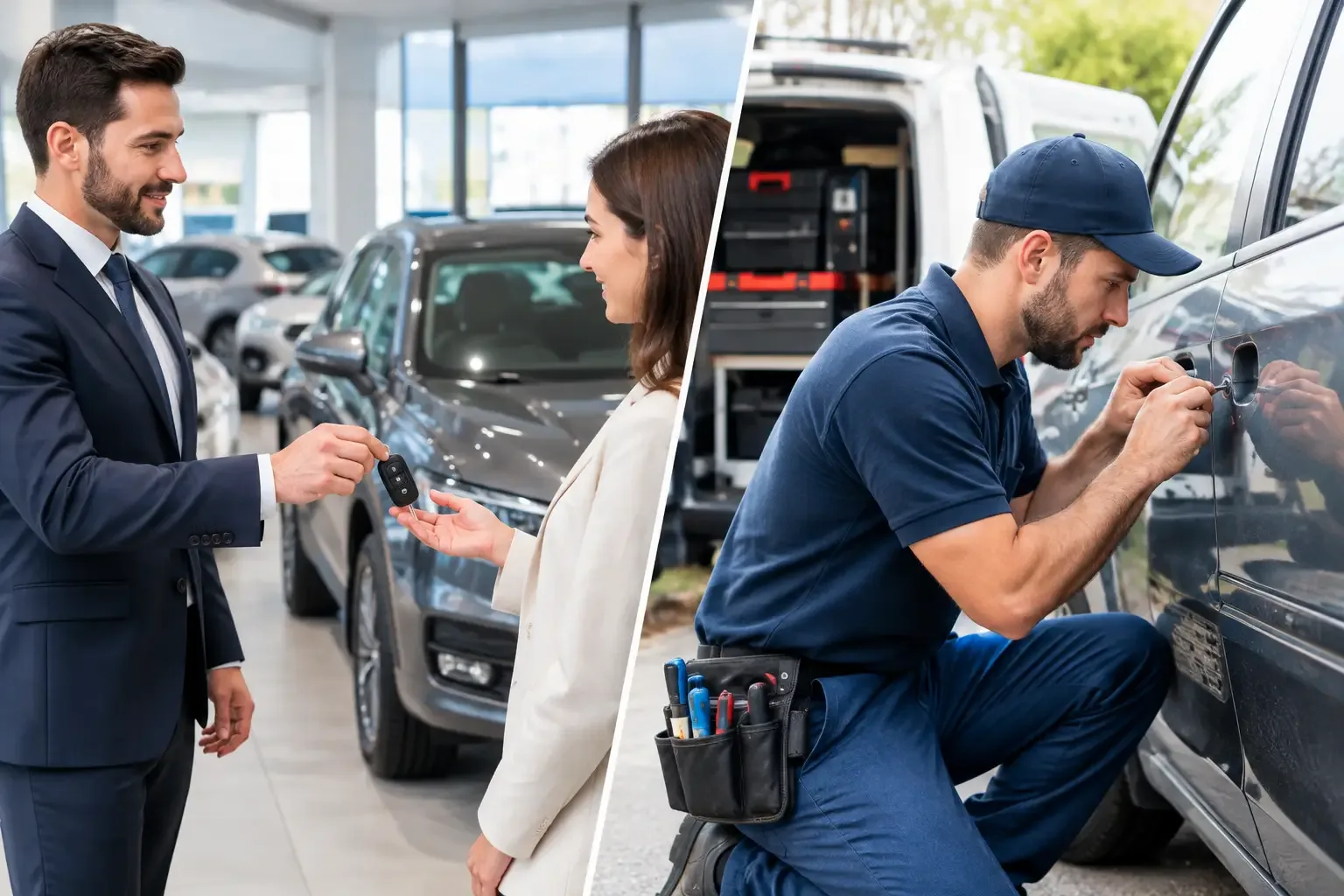
That is why a replacement key is not always a simple hardware-store purchase. For many drivers, the fastest answer is an equipped mobile locksmith who can cut the key, program it at the vehicle, and test it before leaving - without a tow or a dealership appointment.
What Transponder Key Programming Actually Does
A transponder key contains a small electronic chip, usually hidden in the plastic head of the key. When you place the key in the ignition or bring a proximity fob into the vehicle, the car reads that chip's unique signal. If the signal matches one stored in the vehicle's immobilizer system, the car permits starting. If it does not match, the vehicle may crank without starting, start briefly and shut off, or display a theft or key warning.
Transponder key programming is the process of adding an authorized key or fob to that system. It is not the same as cutting the metal blade. Cutting makes the key operate the door and ignition cylinder. Programming lets it start the vehicle.
The exact process depends on the vehicle. Some older models use a basic chip key and can be programmed with the right diagnostic equipment. Newer vehicles may use remote-head keys, smart keys, push-button proximity fobs, encrypted systems, or manufacturer-specific security procedures. A qualified technician identifies the system first, then uses the proper equipment and method for that vehicle.
Signs Your Replacement Key Needs Programming
The most obvious sign is a key that physically works but will not start the car. You may be able to unlock the door and turn the ignition, yet the engine will not run. A flashing security indicator, a key-shaped warning light, or a message such as “Key Not Detected” can point to an immobilizer issue.
Other situations are less clear. A remote may lock and unlock the doors but fail to start a push-button vehicle. An old spare may start the car while the newly purchased replacement does not. After a lost-key situation, the vehicle may need to be programmed to recognize the new key and, when appropriate, remove missing keys from its memory.
A dead key fob battery can also look like a programming problem. So can a worn ignition cylinder, a damaged chip, a weak vehicle battery, or a problem with the car's antenna ring or key reader. This is why diagnosis matters. Programming a key that is already correctly enrolled will not fix a mechanical or electrical failure elsewhere.
Why a Cut Key Is Not Enough
It is tempting to buy the least expensive blank online, have it cut, and expect the problem to be solved. Sometimes that works for a basic mechanical spare, but it often falls short on vehicles with immobilizers. The chip may be incompatible, the key may be the wrong frequency, or the vehicle may require a specific procedure to accept it.
There is also a quality trade-off. Aftermarket keys and fobs can be a practical, cost-conscious option when they are compatible and properly programmed. Original-equipment keys may be preferred for certain late-model vehicles, complex proximity systems, or drivers who want the closest match to the original. The right choice depends on the year, make, model, available inventory, and the vehicle's security requirements.
A professional should also verify that the key is cut accurately. A poorly cut key can damage or wear an ignition cylinder over time, even if the chip itself is programmed correctly.
What Happens During Mobile Key Programming
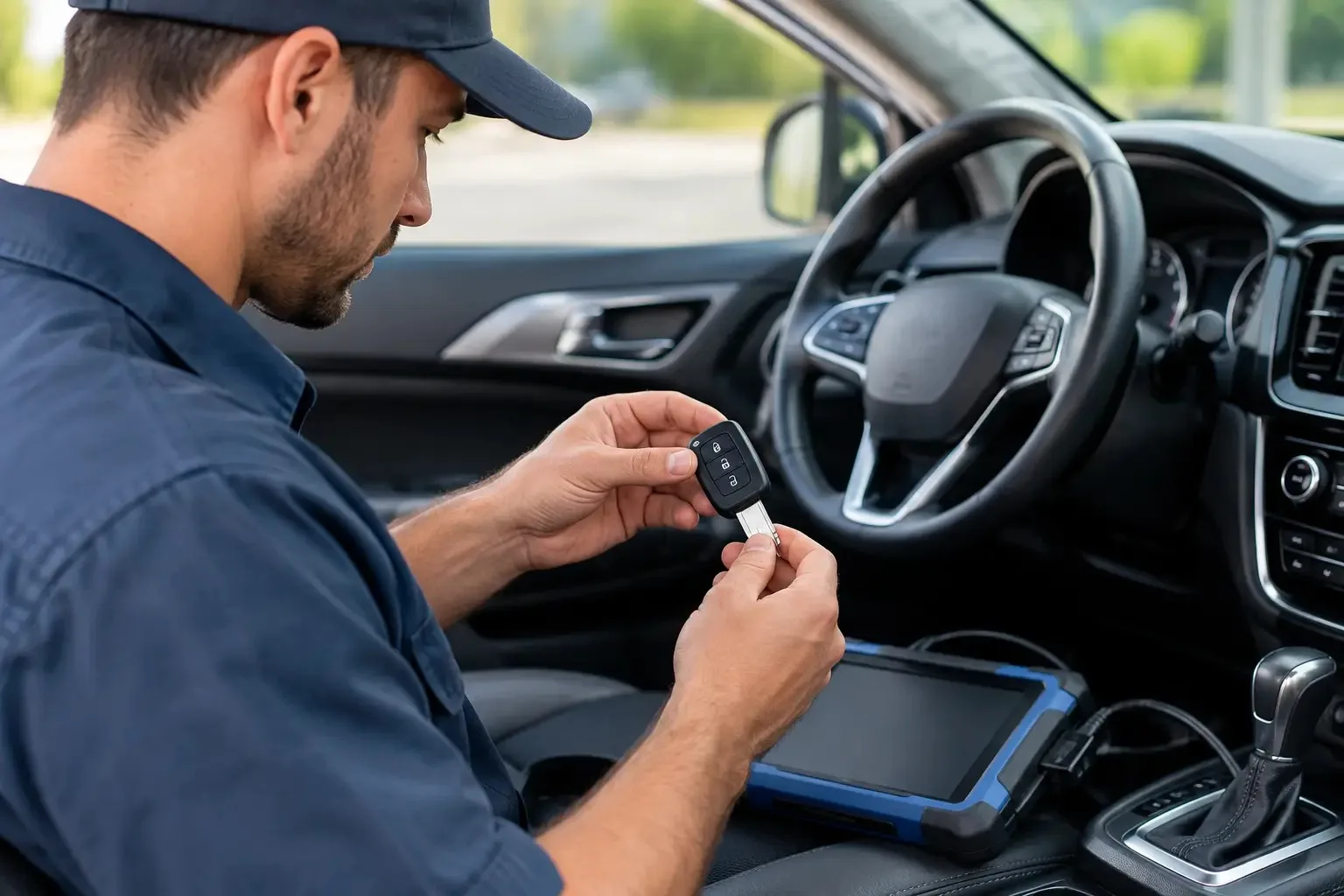
A mobile locksmith can usually handle the work where the vehicle is parked - at home, at work, in a parking ramp, or on the side of the road. That saves you from arranging a tow simply because your car will not recognize a replacement key.
First, the technician confirms ownership and identifies the vehicle and key system. Be ready with a photo ID and proof that you own or are authorized to access the vehicle. That protection matters. Programming a vehicle key changes access to a valuable asset, so legitimate locksmiths do not skip verification.
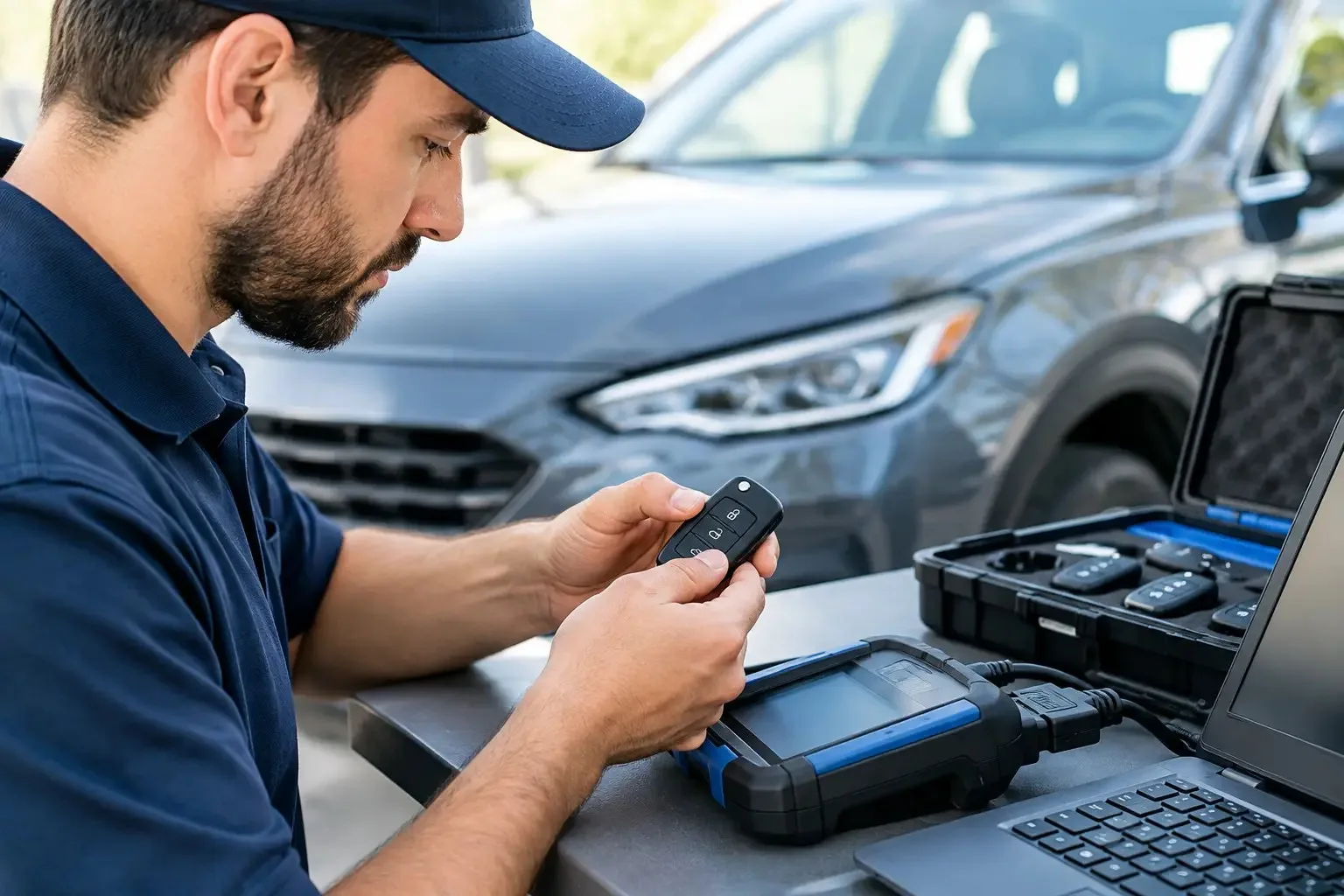
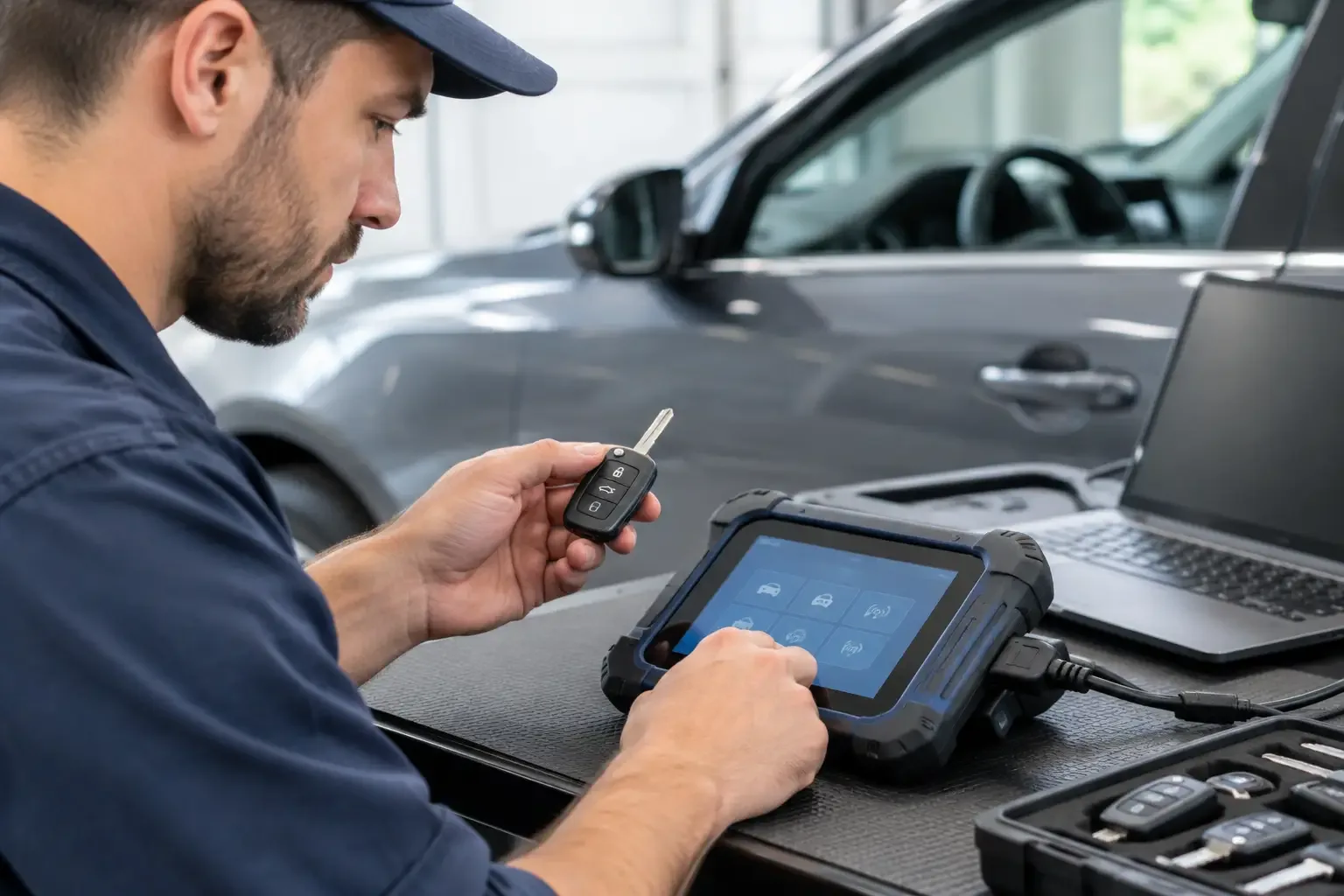
Next, the technician checks the key type, cuts the mechanical blade if needed, and connects the appropriate programming equipment to the vehicle. The equipment communicates with the vehicle's onboard system and follows the required security sequence to add the new key or fob. Depending on the situation, the technician may also check how many keys are currently stored and discuss whether lost or stolen keys should be removed.
Finally, the new key is tested for starting, door operation, remote functions, and proximity detection when applicable. The technician should not leave you with an untested key. A working result means the vehicle starts reliably and the functions included with that key type perform as expected.
When Programming Takes Longer Than Expected
Most straightforward jobs can be completed on-site, but no honest locksmith should promise that every vehicle follows the same timeline. The make, model, year, key style, and security system all affect the process.
All-keys-lost situations often take longer than adding a spare because there is no working key available to verify against. Some vehicles require security waiting periods, additional authorization, PIN retrieval, or manufacturer-controlled access. Very new models and certain luxury vehicles may have restrictions that require dealership involvement or a specific type of original key.
Cold Twin Cities weather can add another practical issue. A weak car battery may not hold enough voltage during programming, especially after a long period of trying to start the vehicle. In that case, stabilizing the battery or addressing the vehicle's power problem may need to happen before programming can succeed.
Can You Program a Transponder Key Yourself?
A few older vehicles allow owners to add another key with a working programmed key and a vehicle-specific procedure. If your owner's manual clearly supports that option and you already have the required working key, it may be worth considering for a spare.
For most modern vehicles, DIY programming is limited or unreliable. The online instructions may not apply to your exact model, the replacement key may not be correct, or the process may require diagnostic tools that are not designed for occasional use. Repeated failed attempts can waste time when you are already unable to drive.
Avoid any method that claims to bypass an immobilizer, defeat security features, or program keys without authorization. Those methods can create legal problems, damage vehicle electronics, or leave your car less secure. The goal is to restore authorized access, not work around the anti-theft system.
What Affects the Cost?
The price of transponder key service is based on more than the time spent at the vehicle. The key or fob itself, chip type, vehicle security system, cutting requirements, programming method, and whether all keys are lost all matter. Remote and proximity fobs generally cost more than a standard chip key because they combine more components and functions.
After-hours service and distance can also affect a mobile dispatch price. Ask for the quoted price before a technician is sent, and make sure you understand whether it covers the key, cutting, programming, and applicable service call. Clear pricing is especially valuable when you are stuck outside a store, at a late-night job, or in a parking ramp with no easy way to get home.
Protect Yourself After a Lost or Stolen Key
If your only key was stolen, replacing it is only part of the fix. Ask whether the missing key can be deleted from the vehicle's memory. That way, a person who finds the old key may still be able to unlock a door mechanically, depending on the vehicle, but should not be able to start the car with its programmed chip or fob.
Once you have a working replacement, consider making a second programmed spare. Keeping one at home or with a trusted person is far less stressful than facing an all-keys-lost call during a Minnesota snowstorm. It can also reduce the cost and time involved the next time a key goes missing.
When your car recognizes neither a new key nor an existing one, do not keep guessing at the problem in a dark lot or a freezing driveway. A properly identified key system, verified ownership, and on-site testing can get you back behind the wheel with a key that does its full job.