Car Key Programming Without a Dealership
By Keyclinic ·
A dead key fob in a grocery-store parking lot, a lost transponder key before work, or a spare key that suddenly will not start the car can throw off your entire day. Car key programming without dealership service is often possible, and for many Twin Cities drivers, it is the faster option. A qualified mobile automotive locksmith can come to the vehicle, verify ownership, cut the key if needed, and program it on-site.
That does not mean every vehicle can be handled the same way. The make, model, year, key type, and condition of the vehicle all matter. Here is what programming involves, when a mobile locksmith is the right call, and when a dealership may still be necessary.
What car key programming actually does
Most vehicles built in the last two decades use more than a metal key. They may have a transponder chip, remote buttons, a proximity fob, or all three. The chip or fob has to communicate with your vehicle's immobilizer system before the engine will start.
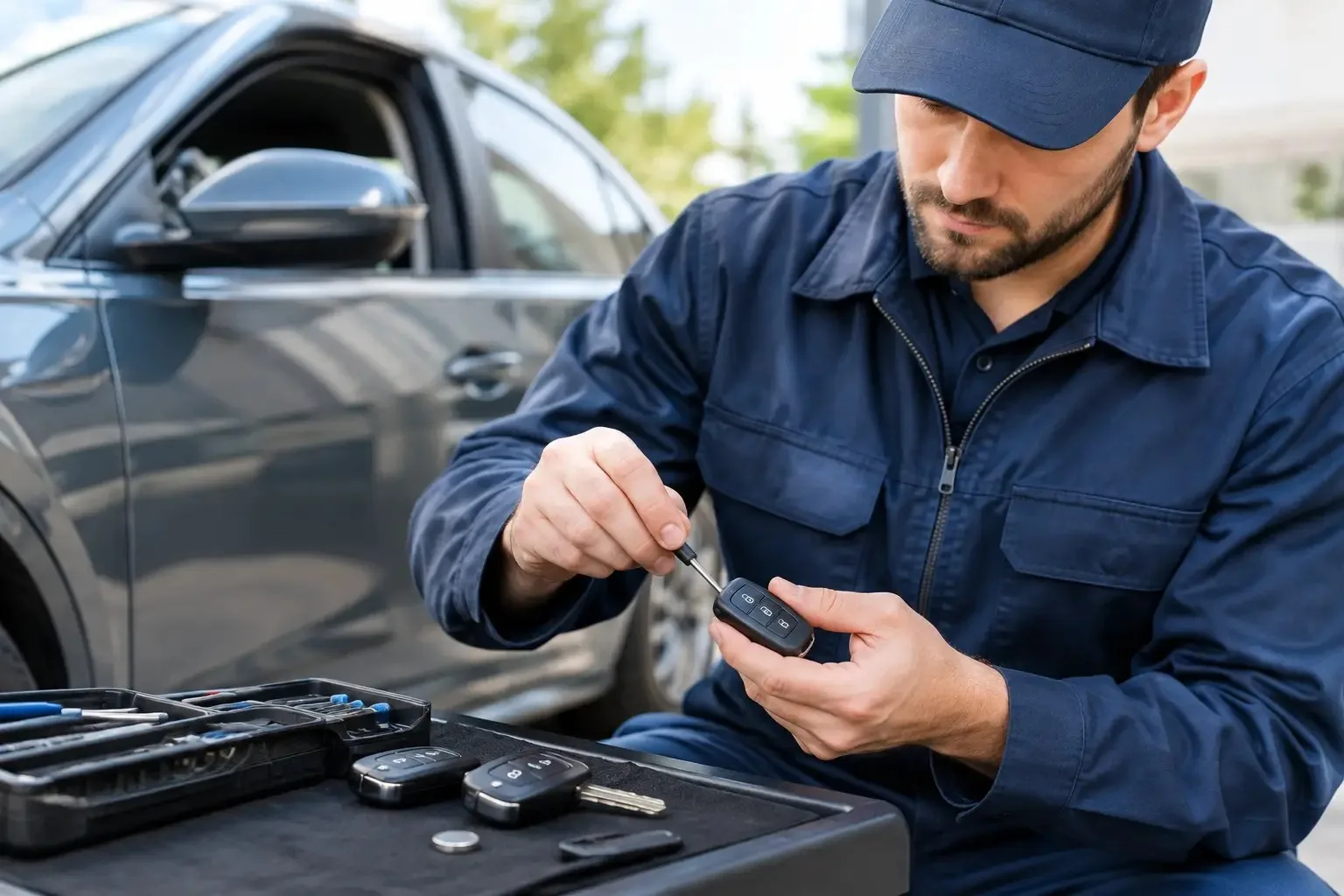
Cutting the metal blade gives you a key that can turn the ignition or open the door. Programming is the separate process that tells the vehicle to recognize that key or fob as authorized. Without it, a replacement key may unlock the door but fail to start the engine. With a push-button-start vehicle, an unprogrammed fob may not be detected at all.
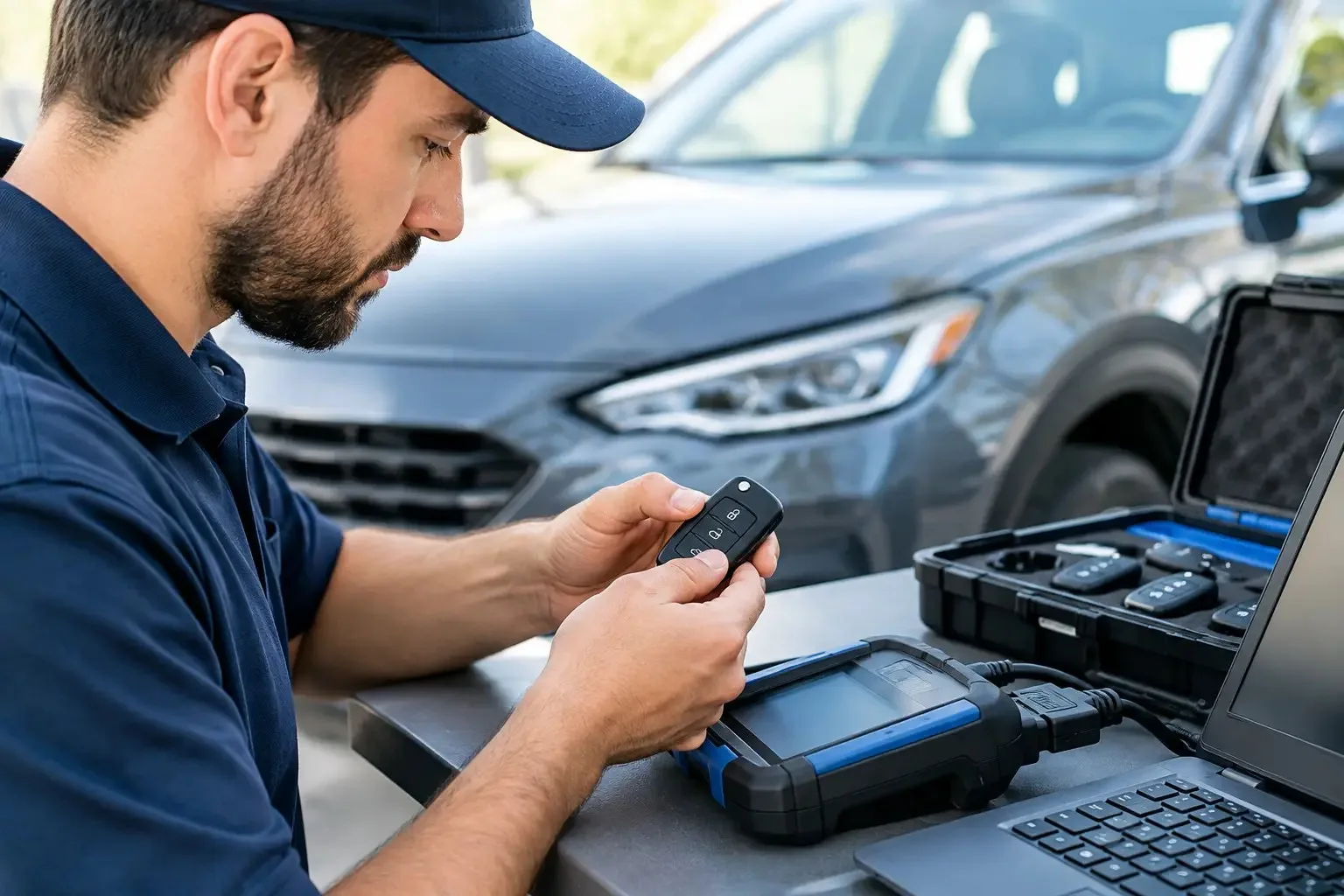
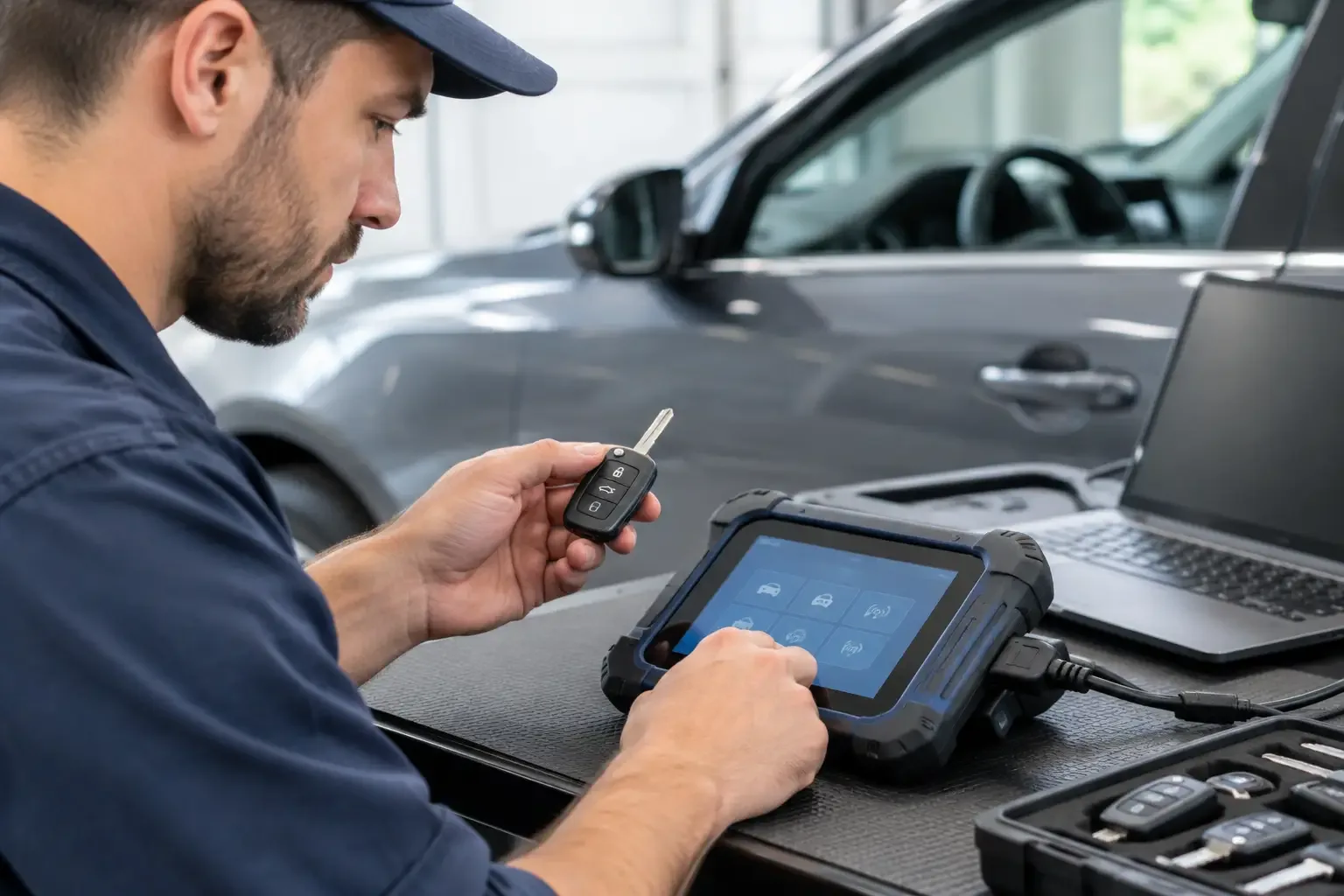
A professional technician uses vehicle-specific diagnostic equipment and programming procedures to add, replace, or erase keys. The equipment is only part of the job. The technician also needs the right blank, the correct key information, and a clear understanding of the vehicle's security system.
Car key programming without dealership delays
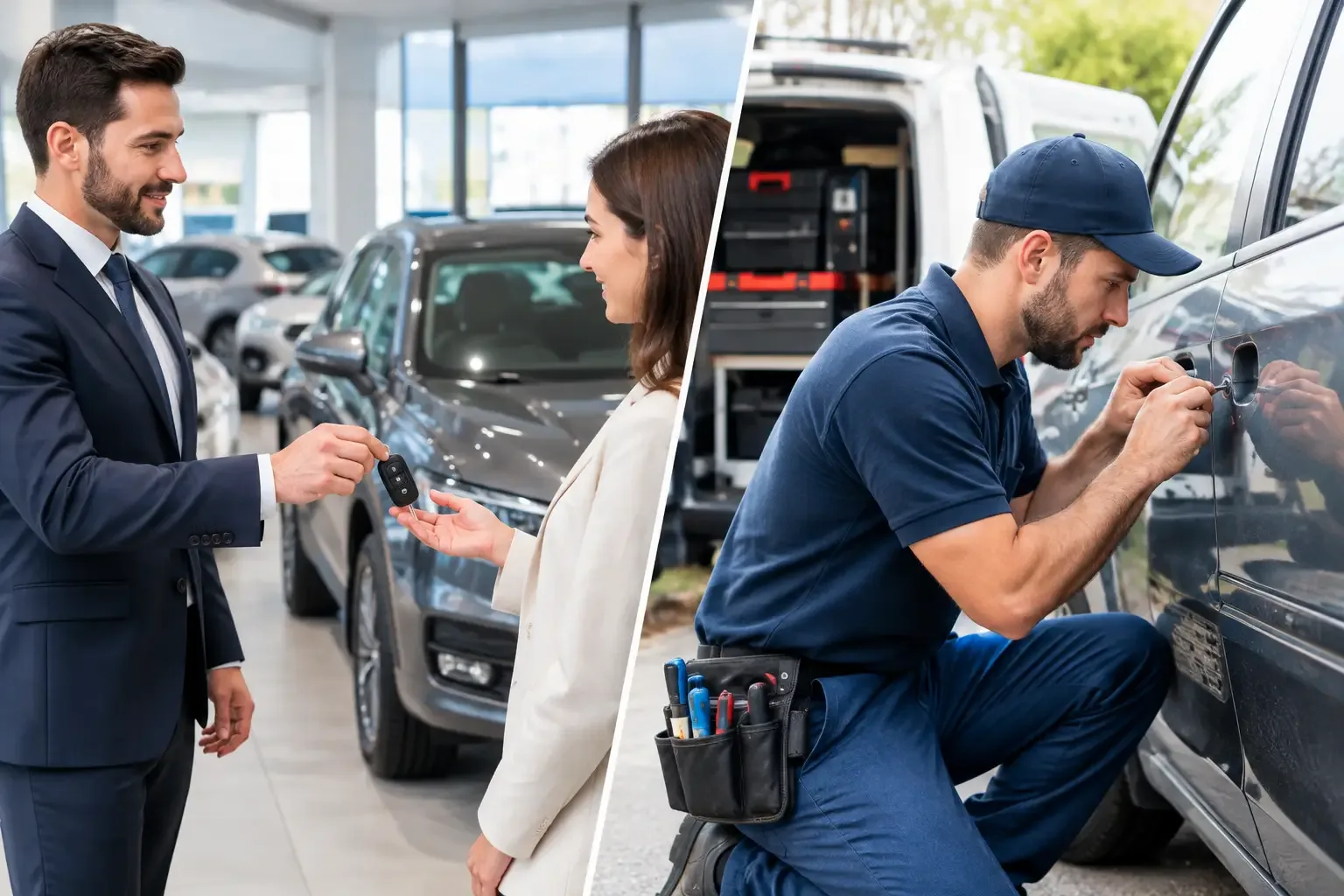
Dealerships are a valid option, especially for newer vehicles with highly restricted key systems. But they are not the only option, and they are rarely the most convenient choice during an urgent situation.
A mobile locksmith can usually meet you where the vehicle is parked. That avoids arranging a tow after an all-keys-lost situation, waiting for a service appointment, or taking time off to sit at a dealership. For a driver stranded at night, at a workplace, or in a Minneapolis parking ramp, on-site service can make a real difference.
In many cases, a mobile locksmith can handle conventional transponder keys, remote-head keys, standard key fobs, and many smart proximity fobs. The technician can often cut a working key and program it during the same visit. If you still have one working key, making a programmed spare is generally simpler than starting from zero after every key is gone.
The key word is often. Vehicle security changes quickly, and some manufacturers place tighter limits on programming access. A reputable locksmith will ask for the vehicle year, make, model, and VIN when needed, then tell you plainly whether the job can be completed on-site before dispatching.
When a mobile locksmith is the better choice
Mobile programming is particularly practical when the car cannot be moved, the dealership is closed, or you need help now rather than next week. It can also be a smart choice when you want a spare key made at home or at work without losing an afternoon to an appointment.
It is usually a strong fit for these situations:
You lost a transponder key or key fob and the vehicle is parked safely.
Your existing remote works inconsistently, has water damage, or no longer starts the vehicle.
You bought a used car with only one key and want a spare before that key disappears.
You are locked out and need a new programmed key after entry is restored.
You need service outside dealership hours, including evenings, weekends, or holidays.
For drivers in Minneapolis, St. Paul, and surrounding suburbs, local mobile service also removes the towing question. A vehicle with no working key is not always easy to move, and towing adds another expense and another delay.
When the dealership may still be necessary
There are situations where the dealership is the correct route. Some late-model vehicles have dealer-only systems, restricted key blanks, or programming requirements that vary by trim level and production year. Certain luxury models and newer electric vehicles can require factory-level authorization or software access.
A dealership can also be useful if your vehicle needs a recall-related software update, module replacement, or warranty work along with the key issue. If the problem is not the key itself but a failed ignition, damaged immobilizer module, or broader electrical fault, programming a replacement fob will not solve it.
The right provider will not promise a fix without checking the vehicle details. Straight answers matter more than a low quote that turns into a dead end after someone arrives.
What to expect from an on-site programming visit
A proper car-key service begins with proof of ownership. Have your photo ID, vehicle registration, title, or insurance documentation ready when possible. This protects you, the vehicle owner, and the technician. No legitimate locksmith should program a key for a vehicle without verifying authorization.
Next, the technician confirms the vehicle information and examines the existing key or fob if you have one. They identify the correct replacement, cut the blade where applicable, and connect approved programming equipment to the vehicle. Depending on the vehicle and the key type, the process may involve placing the new fob in a specific location, accessing the diagnostic port, or completing security steps through the vehicle system.
Before leaving, the technician should test more than the engine start. A complete check can include door lock and unlock functions, trunk release, panic button, remote start when equipped, and proximity detection. If an old key was lost or stolen, ask whether it can be removed from the vehicle memory so it no longer starts the car.
At 24/7 Key Clinic, the goal is to explain what can be done before the technician is sent out, provide upfront phone pricing, and complete common key and fob jobs where your vehicle is located. That is especially useful when the problem happens after regular business hours.
Can you program a key yourself?
Sometimes, but it depends heavily on the vehicle. A few older models allow an owner to add a duplicate key by following a specific ignition sequence, usually when two working programmed keys are already available. Some aftermarket fobs can be paired for lock and unlock functions with instructions, yet still require professional programming for the immobilizer chip that starts the engine.
DIY programming can save money only when the procedure is clearly supported for your exact vehicle and you have the correct, compatible key. Buying a cheap fob online can create a different problem: it may have the wrong frequency, wrong chip, wrong blade, or a previously used circuit board that the vehicle will reject.
Be careful with online claims that a universal scanner or generic fob works on every car. Modern vehicle anti-theft systems are designed to prevent unauthorized access. A failed DIY attempt can also leave you with a key that still does not work and no clear path back to the original setup.
How to avoid a key emergency later
The easiest programming appointment is the one you schedule before an emergency. If you only have one working key, get a tested spare made now. Store it somewhere secure at home, not hidden inside or under the vehicle. If you use a proximity fob, replace its battery when range becomes noticeably weak rather than waiting for a no-start situation.
After buying a used vehicle, count every key and fob that came with it. If a previous owner, valet, or family member could still have a key, consider having the vehicle's key memory reviewed and old keys erased. It is a small security step that can prevent a larger problem later.
If your car key stops working in the Twin Cities, do not assume a dealership and a tow are your only choices. Have the vehicle information and proof of ownership ready, ask whether on-site programming is available for your model, and choose a licensed, insured provider that gives you a clear price before help is on the way.